Industry Playbooks
Construction & Heavy Equipment Financing: From a Single Skid Steer to a Full Fleet
7/14/2026 · 9 min read
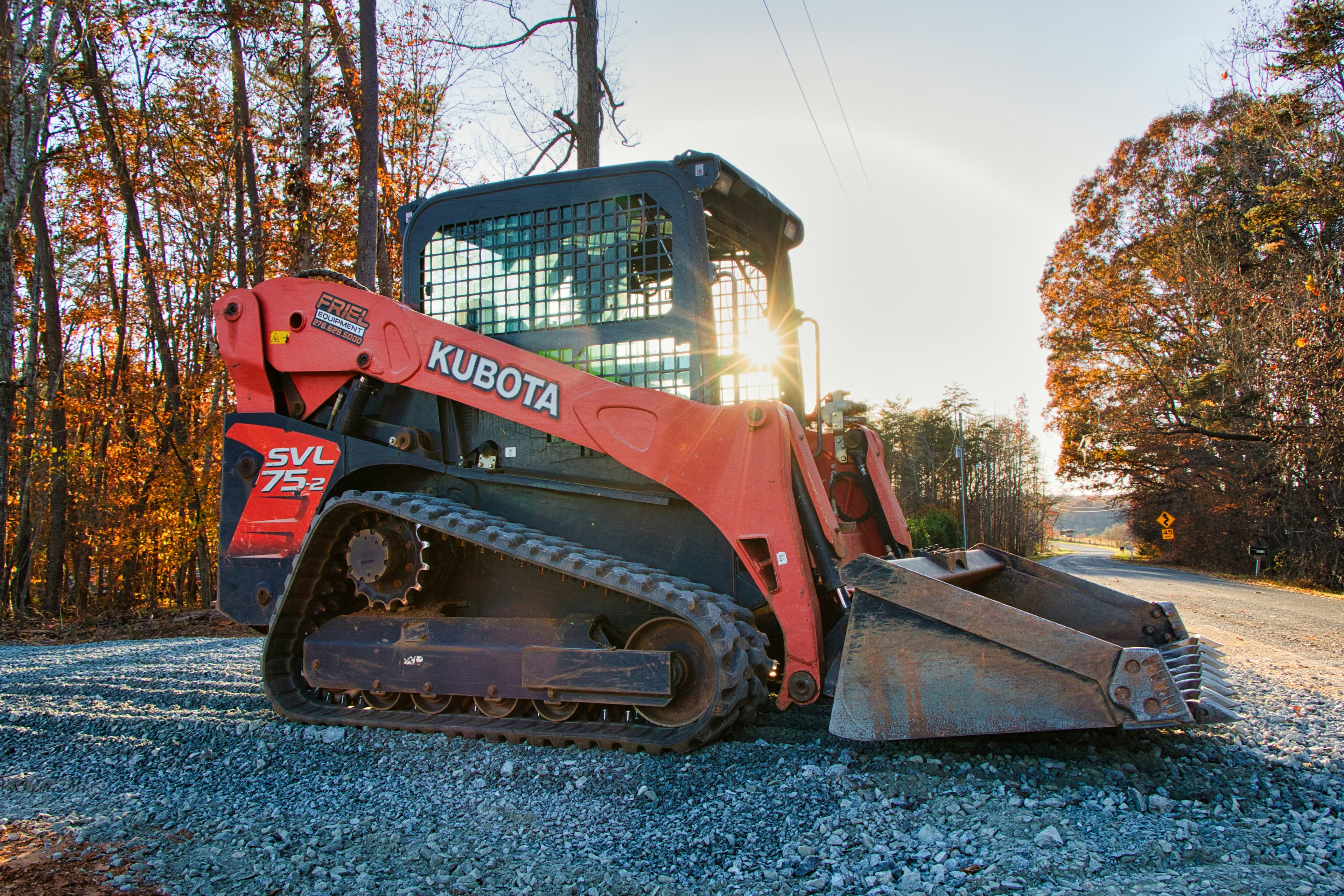
A general contractor buying one used skid steer and a highway paving company financing twelve new asphalt pavers are solving the same problem: equipment has to hit the job site before the job pays out. The gap between "we won the contract" and "we have cash from the contract" is where most construction companies either grow or stall.
Construction equipment financing exists to close that gap. In 2026, with the construction equipment finance market projected to grow from roughly $63.6 billion to $69.3 billion this year, more contractors are financing more of their fleet than ever, including companies that could technically pay cash.
Why cash-rich contractors still finance equipment comes down to control. Paying cash for a $180,000 excavator feels simple, but every dollar tied up in iron is a dollar not available for payroll, mobilization, fuel volatility, or the next bid package. When owners talk about staying "liquid," this is exactly what they mean.
Financing lets a contractor match equipment cost to equipment revenue. A dozer expected to produce income for eight years should not force a month-one cash drain. Spreading payments over useful life is standard for equipment-heavy operators, from single-truck excavation outfits to regional paving contractors.
What is financeable is broader than most teams assume. Under $50,000, lenders commonly fund compact track loaders, skid steer financing requests, mini-excavators, attachments, compressors, and used pickups for crew transport. In the $50,000 to $250,000 band, full-size excavators, wheel loaders, backhoes, dozers, rollers, and telehandlers are routine.
As deal size rises, structure options usually widen with it.
$250,000 to $1,000,000 requests often include crawler cranes, motor graders, paving trains, multi-unit fleet purchases, and specialized demolition assets.
Above $1,000,000, lenders commonly finance tower cranes, infrastructure-scale earthmoving fleets, and major public works equipment packages.
Across both ranges, new or used, titled or non-titled, dealer or private-party purchases can often be structured.
In the current 2026 rate environment, well-qualified borrowers (often 650+ FICO and two or more years in business) are generally seeing heavy equipment financing rates in the 7% to 16% APR range. The spread is mostly driven by credit profile, time in business, collateral age, and deal complexity more than headline market averages.
Many analysts expect national averages to settle around 6.5% to 7.5% by year-end if the Fed stays on a measured rate-cut path. Even so, underwriting remains selective. That means application quality and lender fit matter as much as the nominal rate. Strong files get structured. Weakly presented files get delayed or declined.
Startups and credit-challenged contractors are not shut out. They are simply routed to different underwriting channels than a 20-year paving company with deep financials. That is the core reason a multi-lender process works: one institution's no can be another lender's clear yes when the risk profile matches its specialty.
Construction equipment leasing vs. buying is where many teams make avoidable mistakes. Contractors often default to a loan because ownership feels safer, or default to a lease because the payment looks lower. The right answer depends on utilization horizon, replacement cycle, and balance-sheet strategy.
A loan structure usually makes sense when equipment will remain productive long after payoff, such as certain dozers, loaders, and cranes. A lease can be stronger when replacement cycles are shorter, technology changes quickly, or management wants to preserve borrowing capacity for additional purchases. For some firms, leasing can also help keep statements lighter for bonding-sensitive bids.
Section 179 remains a major planning lever in 2026.
With a $2,560,000 deduction limit and 100% bonus depreciation reinstated for 2026, many contractors can deduct qualifying financed equipment in the year it is placed in service, even if payments are spread across multiple years.
That can materially improve near-term cash posture.
This is not tax advice, and each business should confirm eligibility with its CPA. Still, tax treatment should be part of the financing conversation before signing. Deal structure affects outcomes, and waiting until year-end to review terms is often too late to optimize.
What gets a contractor approved is usually operational credibility more than perfect paperwork. Lenders weigh time in business, current backlog, signed contract visibility, equipment use case (owner-operator versus fleet deployment), and existing debt load relative to revenue. Newer companies can absolutely get funded, but lender selection must match company stage.
Speed matters because bid cycles are fast and equipment timelines are unforgiving. Traditional one-bank processes often take weeks, while many subcontractors need a decision in days or less to keep awarded jobs on schedule. Slow approvals can quietly erase margin by delaying mobilization.
Prime EquiFi is built for that reality. One application can be presented across 50+ lending partners at the same time, with many contractors seeing decisions in about two hours instead of 21+ business days. Different lenders specialize by equipment type, borrower profile, and deal size, from a small attachment package to a seven-figure fleet expansion.
There is no upfront cost to see what options are available. Prime EquiFi is compensated by lending partners, not by charging the contractor to review programs. That allows teams to compare structure, speed, and total economics before committing to one path.
Pro tip
always request at least three structures before signing, even if your relationship bank already provided terms. The lender pool for a used skid steer financing request is not the same pool that prices a new crawler crane or a multi-unit paving package. Comparing multiple structures is often where the best option appears.
Ready to evaluate your next purchase, whether it is a $15,000 attachment, an excavator loan, or a $1.5 million fleet upgrade? Get pre-qualified with no upfront cost.