Big-Ticket Financing
Data Center Equipment Financing: Funding the Build Behind the Boom
7/19/2026 · 10 min read
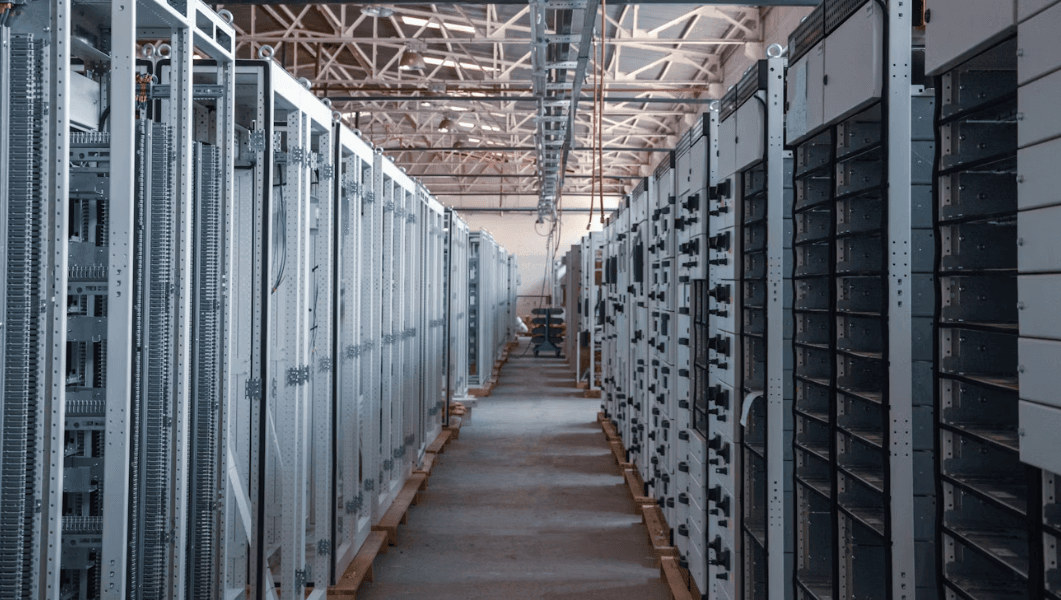
U.S. data center construction spending reached $49.5 billion through April 2026 alone, nearly four times the year-ago pace, while AI-driven demand has pushed average new-facility cost to roughly $475 million.
Major hyperscalers have announced massive 2026 capex plans tied to AI infrastructure, and every one of those headline commitments sits on top of equipment that must be purchased, installed, and financed before the facility is fully revenue-producing.
For developers, colocation operators, and infrastructure contractors, data center equipment financing is not optional. It is the mechanism that keeps projects moving without concentrating every dollar on one balance sheet.
A large share of data center capex is tied directly to financeable equipment categories.
Electrical and power infrastructure often represents 40% to 45% of total data center construction cost, including interconnection equipment, switchgear, UPS systems, generators, and power distribution units.
With cost per megawatt rising and AI-optimized facilities frequently requiring higher spend per MW, these line items are material even relative to total project value.
Generator and cooling system financing has become especially important as utility constraints push more operators toward on-site resilience and high-density thermal designs.
Power infrastructure assets include generators, switchgear, UPS, transformers, and PDUs, increasingly financed as standalone packages when sponsors need to sequence procurement independent of full project close.
Cooling systems now include both traditional CRAC and CRAH as well as liquid-cooling deployments designed for high-density AI rack loads, making cooling upgrades a growing independent financing track.
IT infrastructure, including racks, networking, and storage, often carries shorter depreciation cycles and is commonly financed on shorter terms or through operating lease structures to preserve refresh flexibility.
On-site generation has also emerged as a distinct financing class as utility interconnection timelines lengthen and operators build more power capacity directly on premise.
Underwriting selectivity in 2026 makes structure strategy as important as rate.
Data center construction financing is available, but lenders are increasingly focused on power delivery certainty, interconnection timing, and whether projected energy pricing still supports project economics.
That is why splitting equipment into specialized financing tracks can be more effective than forcing every category through one construction lender workflow.
Separate tracks let sponsors match generators, cooling systems, and enterprise IT with lenders who actually underwrite those assets, rather than accepting a partial fit from one broad underwriter.
Loan and lease structures should follow each asset's useful life and refresh cadence.
Operating leases are often preferred for IT and server infrastructure where practical refresh windows can run three to five years.
Term loans and capital leases are more common for power and cooling assets that may run fifteen to twenty years or longer in production environments.
Section 179 and 100% bonus depreciation in 2026 can materially change effective project cost for qualifying equipment, but the impact depends on acquisition structure, in-service timing, and tax profile.
Given equipment budgets that can run into the tens of millions, depreciation strategy should be modeled with a CPA before financing terms are finalized.
Lenders in this segment typically evaluate sponsor execution history, utility interconnection or power-purchase status, equipment vendor strength, and tenant commitment quality.
A generator package tied to a signed long-term colocation agreement is underwritten very differently than the same equipment in a speculative build.
Data center equipment financing spans multiple specialized lending niches, power infrastructure financing 2026 profiles, industrial cooling, and enterprise IT hardware, where few single institutions are equally strong across all categories.
Prime EquiFi runs one application across 50+ lending partners, routing each equipment class to lenders that specialize in that asset type, with many operators seeing initial decisions in about two hours.
There is no upfront cost to compare options. Prime EquiFi is compensated by lending partners, not by the developer or operator.
Pro tip
Match term length to asset life. Finance power and cooling on long-life structures, and finance IT/server layers on shorter refresh-aligned terms or leases. Putting all categories on one blended term is one of the most common and most expensive mistakes in data center capital planning.
Building or upgrading a data center facility? Get pre-qualified with no upfront cost and see what 50+ lenders can structure for your project.