Industry Playbooks
Industrial & Manufacturing Equipment Financing: Funding the Machines That Run the Plant
7/15/2026 · 9 min read
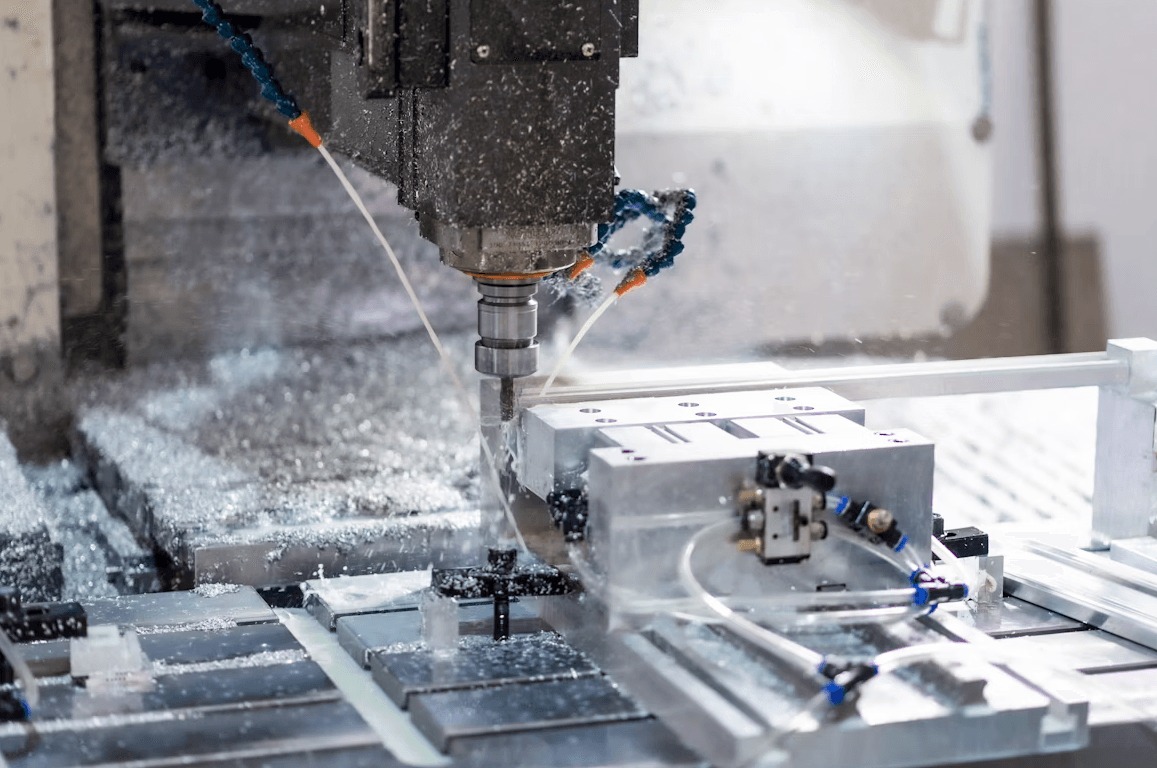
A CNC machine shop adding a fourth mill and an automotive parts supplier building a robotic welding cell face the same underlying math: the equipment has to be running and producing billable parts long before it is fully paid for.
In manufacturing, idle capital trapped in a paid-off machine is capacity that is not being reinvested in the next line, the next shift, or the next contract.
That is why industrial manufacturing equipment financing, not cash purchasing, is the default acquisition strategy across the sector, from single-shop CNC operations to multi-line industrial plants.
Manufacturing equipment financeable assets are broader than most operators expect.
Under $100,000, many operators finance used CNC mills and lathes, welding equipment, forklifts and conveyors, smaller injection molding machines, and shop-floor automation add-ons.
$100,000 to $500,000 transactions often include new multi-axis CNC machining centers, industrial robotics cells, packaging lines, and mid-size injection molding presses.
$500,000 to $1,000,000 requests commonly involve automated production lines, large-format fabrication equipment, and integrated robotics-plus-conveyor systems.
Above $1,000,000, lenders regularly structure full production line builds, plant-wide automation retrofits, specialized aerospace or medical-device equipment, and turnkey packages for new or expanded plants.
New or used, domestic or imported, single machine or full line, nearly all of it can be financed or leased.
2026 rate and structure options reward matching speed, collateral, and timeline.
CNC machine financing and broader factory equipment loan terms typically run 24 to 84 months, aligned to expected productive life on the floor.
SBA 7(a) remains competitive for qualifying manufacturers, often around 9% to 11.5% with coverage up to $10 million, but timelines are usually measured in weeks, not hours.
For shops prioritizing speed, conventional equipment finance and leasing structures can move faster and are underwritten around machine resale value plus business cash flow rather than full SBA documentation depth.
A notable 2026 trend: more lenders bundle machine cost with tooling, workholding, rigging, installation, and operator training into one financed package.
For a shop financing a $350,000 machining center, rolling an additional $30,000 to $50,000 of deployment costs into one payment can preserve delivery-day cash.
Lease vs. loan should follow replacement cycle and ownership horizon.
$1 buyout leases are common for mills, lathes, and robotics financing projects expected to stay on the floor long-term.
Operating leases can fit technology-heavy systems expected to be upgraded within about five years, especially when preserving borrowing capacity for the next expansion matters.
Section 179 and bonus depreciation remain major leverage points in 2026.
With a $2,560,000 Section 179 cap and 100% bonus depreciation reinstated, a manufacturer financing a $600,000 automation cell may deduct the full purchase price in the current tax year while paying over 60 or 72 months.
That creates a materially different cash-flow profile than paying cash and depreciating on a slower schedule. Always confirm treatment with a CPA for the exact equipment and structure.
Lenders usually evaluate time in business, replacement versus expansion use case, contract or purchase-order support, current debt relative to revenue, and collateral resale strength.
A recognized CNC platform with broad resale demand is often easier to finance than a highly custom single-purpose system at the same price point.
Newer shops are not excluded, but they are typically better served by lenders specializing in early-stage manufacturing profiles versus lenders built around mature Tier 1 suppliers.
A single-bank strategy means one underwriting view, one risk box, and one decision timeline. If that lender declines a production line financing request, the operator often restarts from zero.
Prime EquiFi runs one application across 50+ lending partners simultaneously, with many manufacturers seeing initial decisions in about two hours instead of waiting through a 21+ business-day single-bank path.
Because lender specialization varies by equipment category, credit profile, and ticket size, parallel lender matching is often what turns one bank no into a machine running on the floor.
There is no upfront cost to compare options. Prime EquiFi is compensated by lending partners, not by the manufacturer.
Pro tip
Before signing a production line package, ask whether tooling, rigging, and installation can be bundled into the same payment. A quote that looks best on rate alone can become more expensive if those costs are financed separately or paid out of pocket.
Financing a single machine or an entire line? Get pre-qualified with no upfront cost and see what 50+ lenders can offer.