Big-Ticket Financing
Marine & Overwater Logistics Financing: Funding Vessels, Barges, and Port Equipment
7/15/2026 · 9 min read
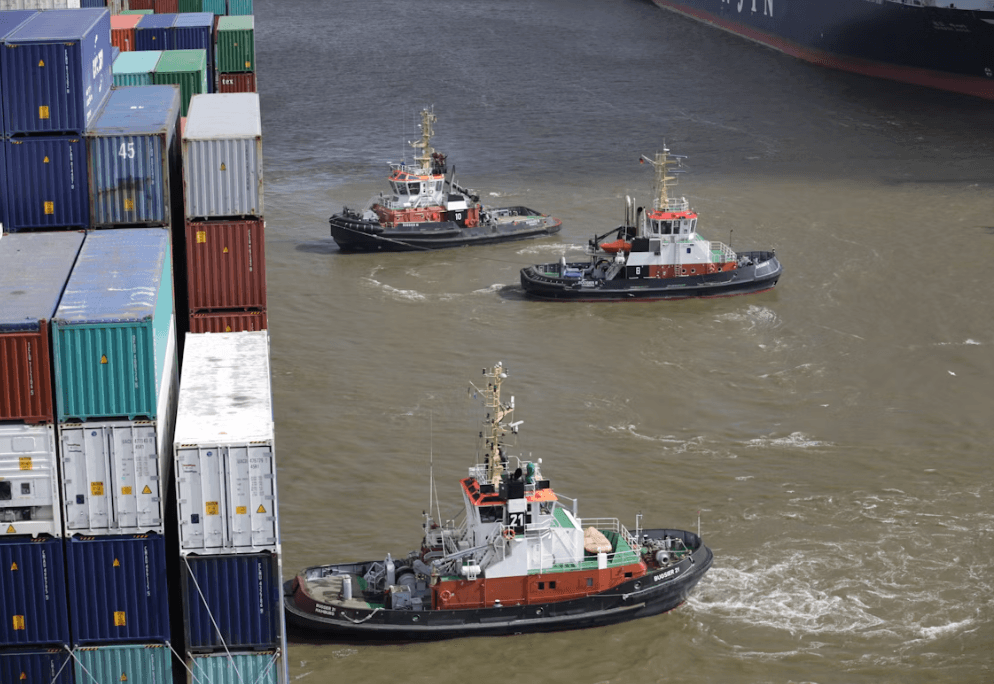
A regional towing company financing a single tugboat and a marine logistics operator financing a barge fleet and dockside cranes are underwriting the same core asset class: heavy, long-lived, expensive-to-replace equipment that operates in one of the most specialized corners of equipment finance.
Marine and overwater logistics equipment does not move through generalist bank underwriting the way a delivery truck does, and that specialization is exactly why many operators end up financing through lenders who do not fully understand the asset.
What is financeable in marine and overwater logistics is broader than boats alone.
Vessels include tugboats, cargo barges, offshore supply vessels, dive support vessels, research vessels, ferries and water taxis, fishing and charter vessels, and passenger excursion boats.
Onboard and port equipment can include marine engines, cranes, navigation and communication systems, and dockside handling equipment.
Infrastructure-related projects may include dock upgrades, shipyard improvements, and capital investments tied to expanded port or terminal capacity.
Ticket size spans a wide range, from a $150,000 used workboat to multi-vessel acquisitions well into eight figures, and financing structures need to flex accordingly.
Marine financing structure should match the asset lifespan and operating plan.
Term loans often run 5 to 20 years depending on vessel size and cost, with the vessel serving as collateral. That structure can be ideal for long-life assets because ownership remains with the operator after payoff, and well-maintained tugboats can stay productive for decades.
Leases are often structured over 3 to 10 years with fixed monthly payments and can fit operators preserving capital for expansion or financing technology-heavy onboard systems with shorter upgrade cycles.
Down payments on marine vessel financing commonly range from 10% to 30% of vessel value, with the exact number driven by vessel age, type, and time in business.
Federal programs can materially change economics for qualifying operators.
The Title XI Federal Ship Financing Program, administered by MARAD under the Merchant Marine Act, can provide long-term guarantees that cover up to 75% of barge costs and up to 87.5% of most self-propelled vessel costs.
It is typically slower and more documentation-heavy than conventional equipment financing, but for qualifying U.S.-flag operators planning major modernization, it is worth evaluating alongside conventional programs in a full-side-by-side comparison.
Marine assets present underwriting realities that do not show up in standard land-equipment files: harsher operating environments, different maintenance curves, Coast Guard and vessel documentation requirements, and thinner resale markets.
A tugboat can have strong residual value, but only to lenders who truly understand tugboat risk and resale behavior.
This is why marine vessel financing is often a wrong-lender problem. A bank comfortable with commercial fishing vessels may decline offshore support assets. A lender focused on ferries may avoid cargo barge transactions entirely.
What lenders evaluate most heavily includes time in business, vessel age and maintenance history, intended use, and evidence of contracted revenue such as charter, towing, or service agreements.
An operator financing a barge with a signed multi-year contract is underwritten very differently than the same vessel purchased speculatively.
Given how segmented marine underwriting is by vessel type and end use, a single-lender strategy is usually a constraint, not a convenience.
A relationship bank that supports one vessel class may have no appetite for a dockside crane, an offshore supply vessel, or a mixed-fleet expansion.
Prime EquiFi runs one application across 50+ lending partners, matching each asset class to lenders who specialize in that specific category rather than routing every request to one generalist credit box.
Most operators see an initial decision in about two hours, with no upfront cost. Prime EquiFi is compensated by lending partners, not by the vessel owner or operator.
Pro tip
Have charter, towing, or service contracts documented before applying. A vessel with signed revenue attached to it tells a fundamentally different credit story than the same vessel without contracted cash flow, and it is one of the fastest ways to move a marine financing decision from maybe to yes.
Financing a vessel, port equipment package, or overwater fleet expansion? Get pre-qualified with no upfront cost and see what 50+ lenders can offer.